
Order: Pelecaniformes | Family: Phalacrocoracidae | IUCN Status: Least Concern
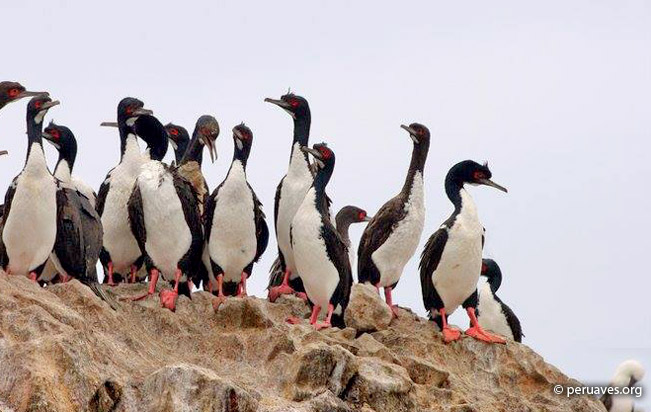
Age: Adults | Sex: Unknown | Loc. Pisco, Peru
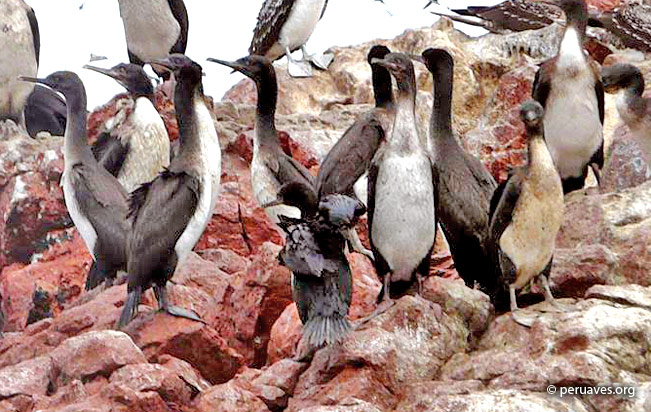
Age: Juveniles | Sex: Unknown | Loc. Pisco, Peru
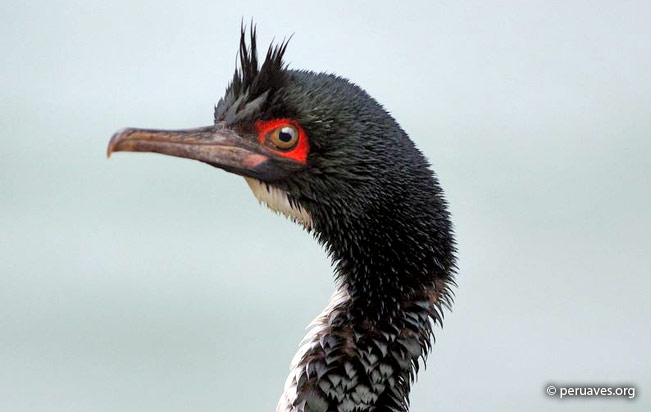
Age: Adults | Sex: Unknown | Loc. Pisco, Peru
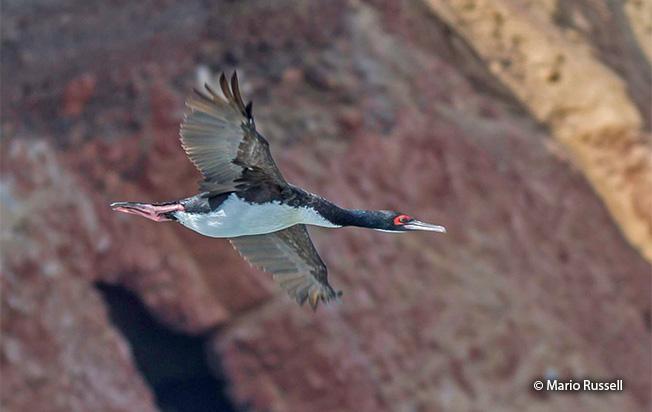
Age: Adult | Sex: Unknown | Loc. Pisco, Peru
Status: The Guanay Cormorant was formerly abundant. Its population declined as a result of commercial over-fishing; although it is still common. Its main breeding colonies are mostly in Peru and Northern Chile. During the non-breeding season, it spreads further south to Chile and north to Ecuador. It also occurs in Co, Ec, and Ch.
Name in Spanish: Cormorán Guanay.
Sub-species: Guanay Cormorant (Phalacrocorax bougainvillii) Lesson, 1837.
Meaning of Name: Phalacrocorax: Gr. Phalakrokorax= loon, cormorant. bougainvillii: After Philippe Potentien Baron de Bougainville, a French mathematician, astronomer, and hydrographer who did work in Peru.
See more of the Family Phalacrocoracidae 
 Voice:
Usually silent away from the nest site. Guttural, hissing and grunting conversational notes at the nest site.
References:
-
- Species range based on: Schulenberg, T. S., D. F. Stotz, and L. Rico. 2006. Distribution maps of the birds of Peru, version 1.0. Environment, Culture & Conservation (ECCo), The Field Museum. http://fm2.fieldmuseum.org/uw_test/birdsofperu on 10/18/2014.