
Order: Strigiformes | Family: Strigidae | IUCN Status: Least Concern
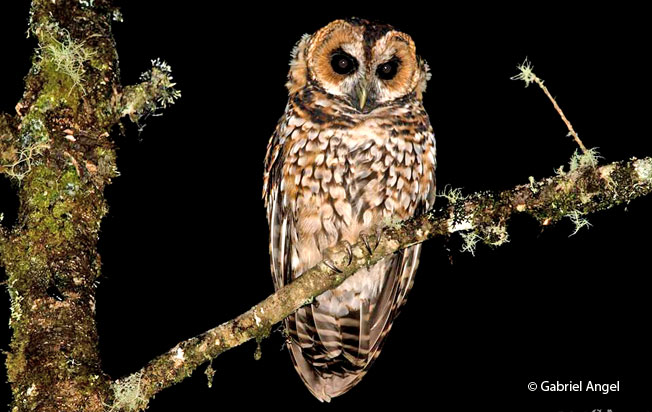
Age: Adult | Sex: Unknown | Loc. No Data
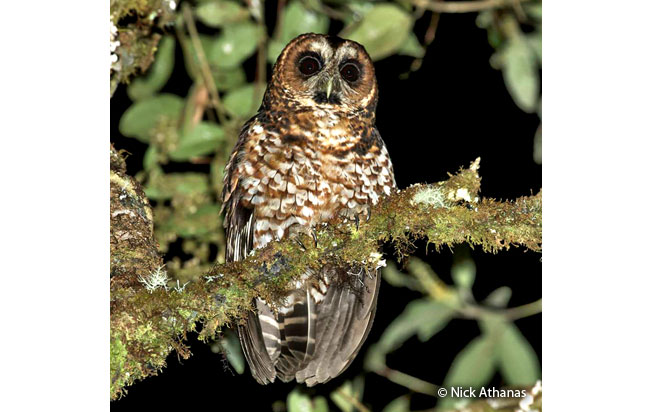
Age: Adult | Sex: Unknown | Loc. Zamora-Chinchipe, Ecuador
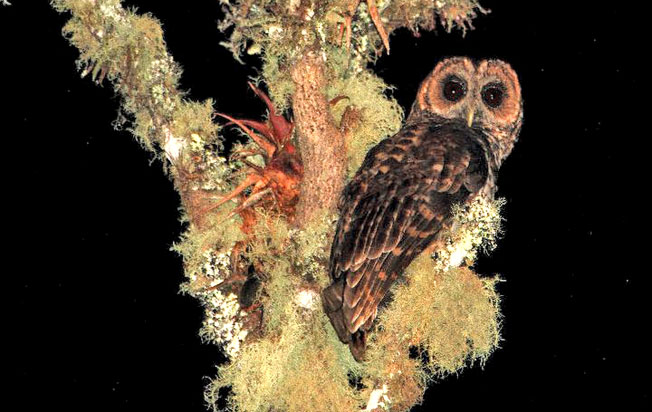
Age: Adult | Sex: Unknown | Loc. No Data
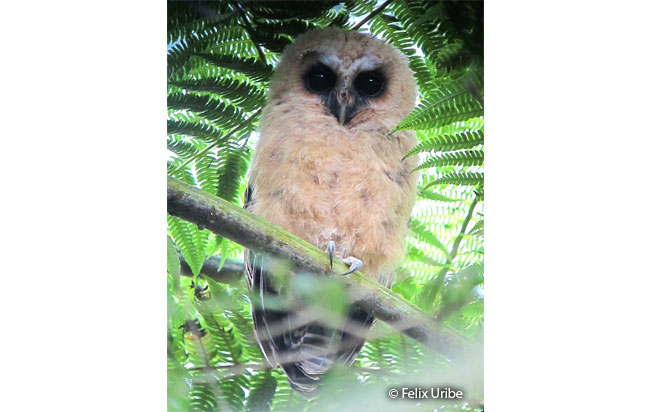
Age: Juvenile | Sex: Unknown | Loc. Eastern Andes of Colombia
Identification & Behavior: ~37 cm (14.5 in). The Rufous-banded Owl is dusky brown above and rufous brown below. The belly has an intricate pattern of bars and specks in shades of rufous, brown, and gray. The iris is dark. The bill is grayish. It has rufous facial discs. It forages in the interior of montane humid forest on the east slope of the Andes. It is similar to the closely related Mottled Owl, which ranges at lower elevations. The range of these two owls is unlikely to overlap.
Status: The Rufous-banded Owl is uncommon in a narrow elevational band of 1900-3500 m on the east slope of the Andes. It also occurs in Co, Ec, and Bo.
Name in Spanish: Búho Rufo Bandeado.
Sub-species: Rufous-banded Owl (Ciccaba albitarsis opaca), J. L. Peters, 1943.
Meaning of Name: Ciccaba: Gr. Kikkabe= a sort of owl mentioned by Aristophanes and Hesychius. albitarsus: L.. albus =white; Modification of tarsus= shank, leg.
See more of the Family Strigidae 
Distribution Map
 Voice
Voice
VoiceReferences:
-
- Species range based on: Schulenberg, T. S., D. F. Stotz, and L. Rico. 2006. Distribution maps of the birds of Peru, version 1.0. Environment, Culture & Conservation (ECCo). The Field Museum. http://fm2.fieldmuseum.org/uw_test/birdsofperu on 08/01/2015.